

What a good fixed-price proposal includes
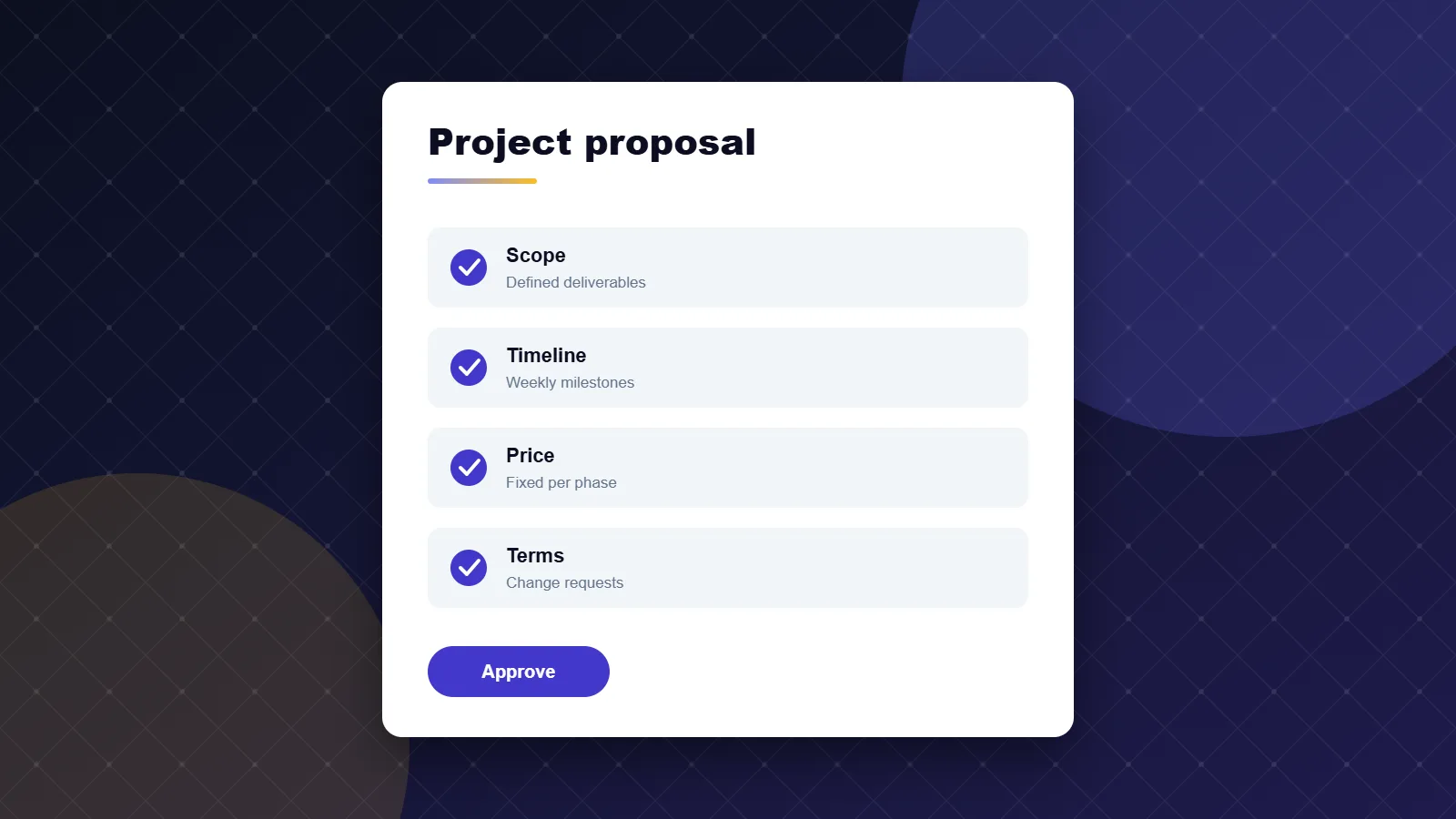
A fixed price is attractive because it removes uncertainty about cost. That only works when the proposal is specific about what the price covers. If you are comparing proposals, or writing one, look for these sections.
A clear statement of the problem
Good proposals begin by describing your situation and goals in the supplier's own words. If they cannot restate what you need, they may not have understood it.
Scope that can be checked
List the deliverables so that anyone can tell later whether each one is done: the screens, the integrations, the user roles, the reports. Just as important, list what is out of scope. Most disputes come from things both sides assumed.
Assumptions and dependencies
State what the price depends on: content supplied by you, access to systems, decisions made within an agreed number of days, third-party services that behave as documented. If an assumption turns out to be wrong, the proposal should say what happens.
A timeline with milestones
Break the work into phases with a demonstration at the end of each. Regular demos let you steer early and catch misunderstandings while they are cheap to fix.
Price and payment schedule
Show the price per phase and when each payment falls due, ideally tied to delivered milestones rather than dates. Say which currency applies and whether taxes are included.
How changes are handled
Requirements change. A good proposal explains how a change is requested, estimated and approved in writing, so that it never arrives as a surprise on an invoice.
Acceptance and warranty
Describe how you will test and accept each milestone, and how long the supplier will fix defects at no charge after launch.
Ownership and handover
Confirm that you own the code, the data and the accounts, and that documentation and repository access are part of the handover. Ask about hosting, support and maintenance options after launch.
Team and communication
Name who will work on the project, how often you will meet and where progress is tracked. If you never speak to the people doing the work, ask why.
A proposal that covers these points takes longer to write, and saves everyone a great deal of time afterwards.